saving lidiia
just a little story about connections

Sometimes, I like to sit and think about the most meaningful people and moments of my life, and trace back how they happened. The small connections that led me to that place, or that time, or that person. A myriad of tiny threads, tied one to another, until they weave into a vivid and even life-changing picture.
And lately, I’ve been thinking about the threads that distantly tied me to a woman named Lidiia Oleksandrivna.
This is where they begin: in early 2022, just weeks after Russia launched its full-scale invasion of Ukraine, I flew to Poland with a Free Press photographer for a reporting trip. I was single at the time, so I set up a profile on a dating app — honestly, less out of interest in dating, and more thinking it could be a way to meet interesting contacts from the humanitarian effort that was sweeping over that country.
On our last night in Warsaw, I matched with a volunteer from New Zealand who’d been running aid into Ukraine. We were going to Krakow in the morning; as it so happened, he also planned to go to there, so we offered him a ride. In Krakow, he invited us to come for drinks with a journalist he’d met named Manuel Orbegozo.
That night, Manuel and I became fast friends. We kept in close touch, and later that summer, when I was preparing to go to Kyiv for the first time, Manuel was there. He insisted I join him at the hostel where he’d been staying. I’m not usually a hostel girl, but with an early curfew in early-wartime Ukraine, I wanted to stay somewhere I had friends. The hostel was an incredible place then; I wrote about it here.
On my first day at the hostel, I met a soldier from Kramatorsk who captured my heart almost from the first look. He wasn’t the reason why I went back to Ukraine for a long stay in January 2023, though he was a reason I stayed as long as I did.
Once I’d moved there that January, I set about finding things to write about. One of my earlier stories for the Free Press from Ukraine was about a Winnipegger who had gone to Ukraine to volunteer. That volunteer introduced me to another Canadian — a handsome, rugged man in his early 60s named Tonko.
In the spring of 2023, when the aforementioned soldier was sent to a combat infantry unit, I started looking for reasons to visit the front-line city of Sloviansk, near where he was deployed. “I’m a journalist,” I thought. “Surely I can find a reason to be there.”
I remembered Tonko telling me about another group that he was volunteering with, called Road to Relief. It was run by a ferocious young Spanish woman named Emma Igual, who commanded a growing humanitarian relief effort with a singular spirit.
So through Tonko, I met Emma. Through Emma, I met my friend Jonathan Lan, a volunteer from California who’d come to Ukraine to help the humanitarian crisis. When Emma and Tonko were killed, Jonathan invited me to come grieve with the Road to Relief team, where I first met my incredible friend, Nicholas Samuels. (We bonded watching a cat give birth in the days of mourning.)
The years turned. Nicholas and Jonathan remained among my dearest friends; from the ashes of Road to Relief, Nicholas launched a new humanitarian effort, Aequitas Aid, and Jonathan hopped on as their chief evacuation driver. The soldier and I kept our connection for several years; while we parted earlier this year, by then I’d hired his brother to help with logistical work on my recent book reporting trip back to Ukraine, and so remained friends with their family.
One night, on my most recent trip, we started talking about Lidiia Oleksandrivna.
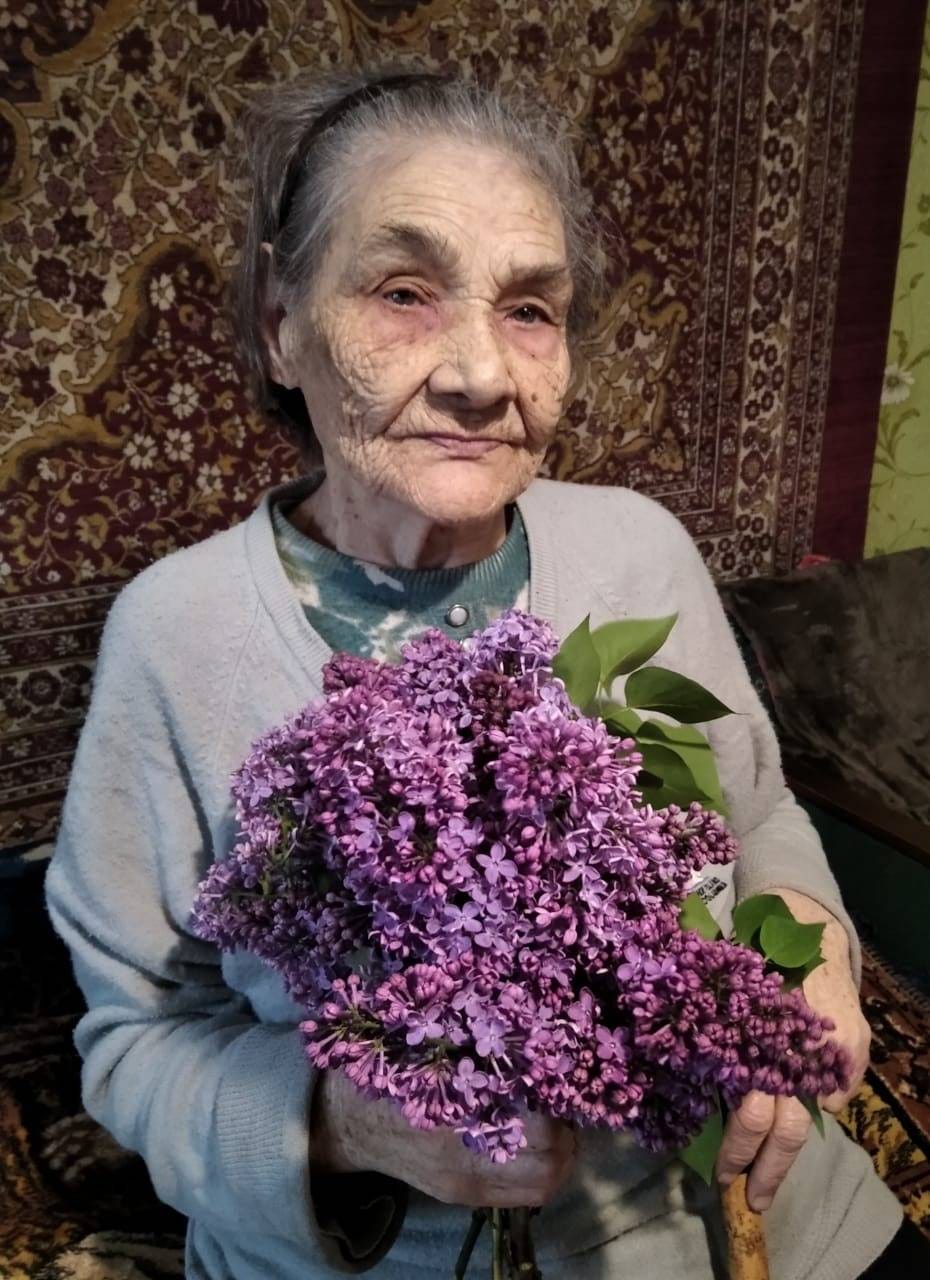
I’ve never met Lidiia, though I’ve heard about her for years, and even know where she lived in Kramatorsk. She’s 90 years old, has mild dementia, and is in fragile health. For years, my friends’ mother had helped take care of her. They weren’t related, but Lidiia has no living family in Ukraine, and so her neighbours pitched in to care for her with food, personal care, and other things she needed.
In the end, all those little connections would help us do something very special.
On April 27, I posted on Bluesky and Facebook asking for help. My friends’ family had decided it was time to get Lidiia Oleksandrivna out of Kramatorsk. The city is located just 15 kilometres from Russian forces. While it was once relatively livable there just a couple years ago, Kramatorsk is now extremely dangerous, and getting worse. Bombs and drones hammer the city daily. By this spring, Lidiia’s paid caregiver had left town, and other neighbours who helped take care of her were also preparing to leave.
If and when everyone left, then Lidiia would be alone, and that’s most likely how she would perish. It already happened once that she’d fallen and remained on the floor of her apartment for over a day. As Russian forces inch closer, as the destruction of her hometown grows more brutal and constant, her most likely fate would’ve been to die alone in her home — whether from bombs, or by the fact there would soon be no-one left to care for her in a ruined and besieged city.
The good news was, my friends’ mom had identified a care home in Kyiv that could take her. My friend Nicholas’s organization, Aequitas Aid, had the right vehicle to take her, and the right driver in Jonathan. All they needed us to cover was fuel — driving an ambulance halfway across Ukraine isn’t cheap. We set a fundraising goal of 15,000 UAH, or about $463 CAD.
I posted to ask if anyone would be willing to chip in by e-transferring me directly. That takes a lot of trust, I know. But we didn’t have time to set up something more transparent. The time to get Lidiia out was upon us; the need was urgent.
In the end, the response from people — friends, followers, readers — in Canada and the United States left me speechless. I’d expected we might be able to round up a few hundred dollars for gas; but before sixty minutes were up, we’d raised over four times that goal. Not only were we able to cover fuel costs to get Lidiia to Kyiv, but we were also able to cover the care at her new nursing home for the next several months.
This was a profound relief to everyone who has taken care of Lidiia.
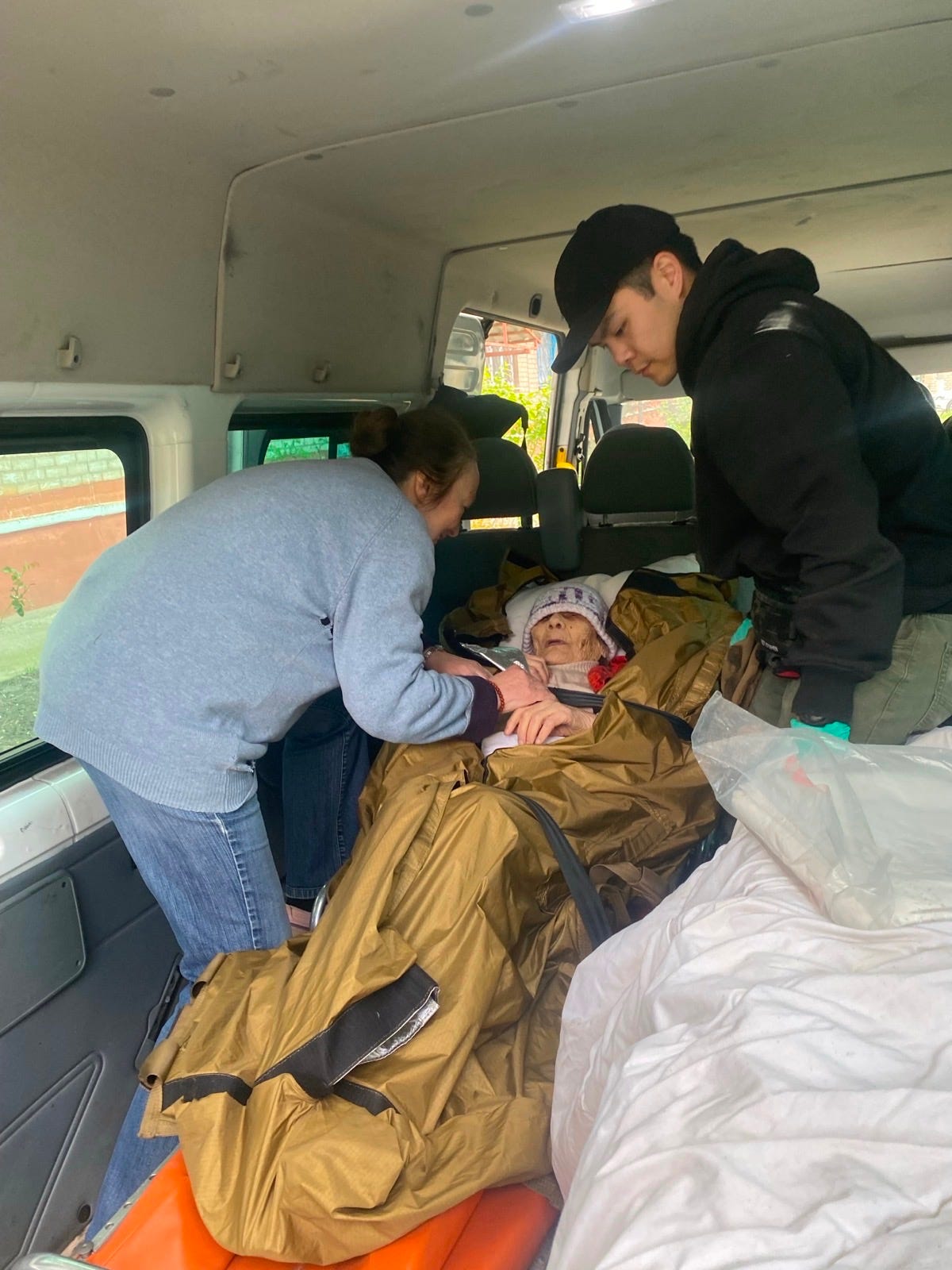
On May 2, less than a week after that post, my friend Jonathan and his team woke up before dawn at their base in Dnipro. They drove to Kramatorsk, passing the wreckage of many buildings blasted to rubble by bombs, and pulled up in front of Lidiia’s home. Carefully, they bundled her up, carried her down the stairs of her old apartment block to their ambulance, and began the long drive to Kyiv.
To do this evacuation, they were awake for over 24 hours and drove more than 1,000 kilometres. They braved driving through an area where humanitarian aid vehicles are regularly struck by Russian drones. One of their Ukrainian teammates sat in the back with Lidiia the whole way, helping keep her calm, comforted, and clean.
Three days after Lidiia left, three large bombs slammed the centre of Kramatorsk. They exploded less than a block from my friends’ apartment, and not far from hers. Five people were killed, including some of my friends’ downstairs neighbours.
Lidiia did not know about this bombing. She was safe in her new care home in Kyiv, a lovely facility located in a large private house near the edge of the capital. After a bit of confusion on her first day there, she’d settled in. She was enjoying the company of other residents and the 24-hour care.
She is safe now. She is cared for. She will not be alone again.
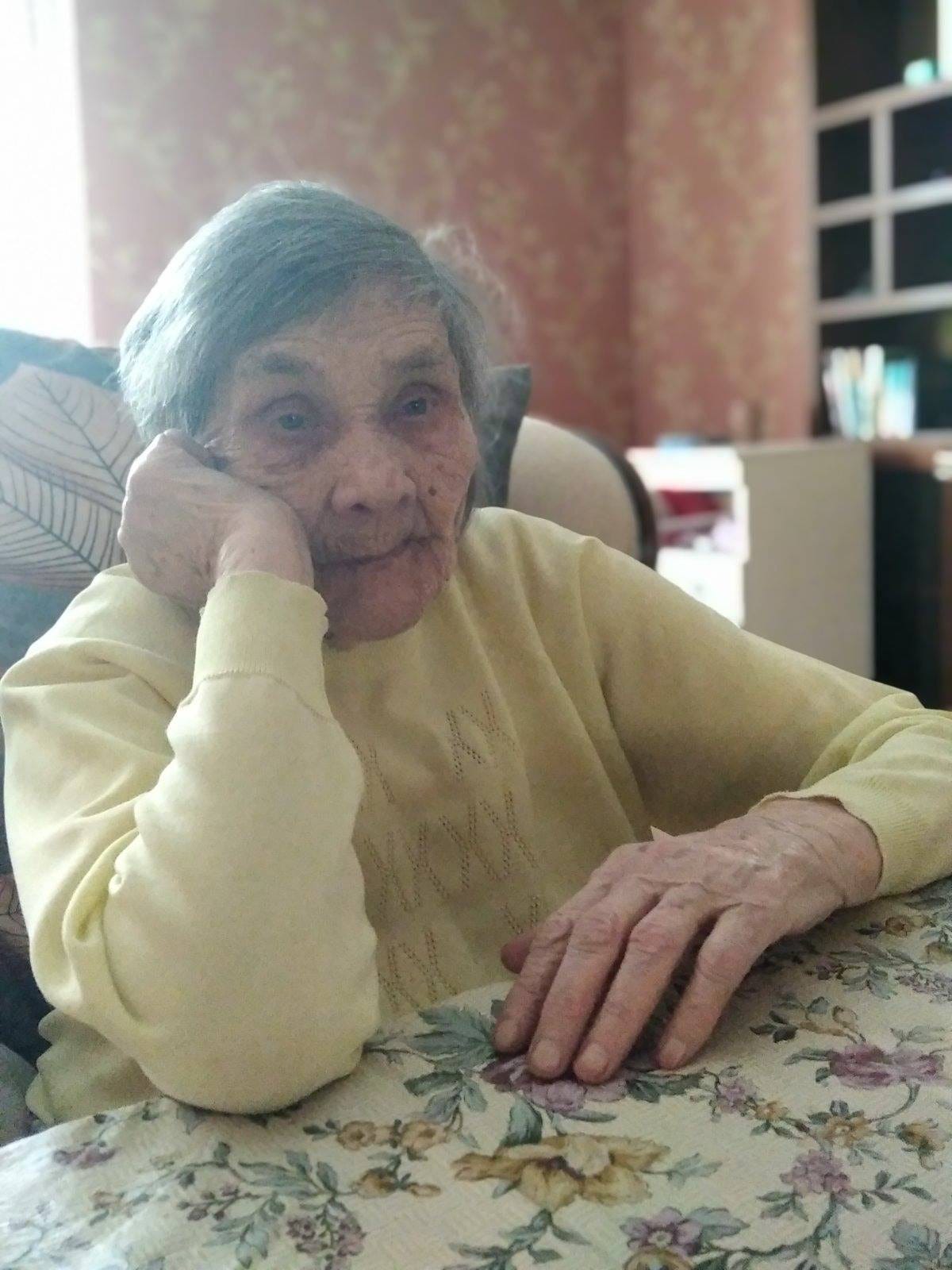
When I saw the first photos of Lidiia at her new home, I wept. This sweet lady should have been able to live out her years in her home, but Russia stole that option from her. Against that grim fact, that so many people from Canada and the United States came together, prompted by a simple social media post, to help protect the life and dignity of a fragile 90-year-old woman is a defiantly human act.
In the days after Lidiia’s evacuation, I reflected on every connection that had made it possible. A Hinge match in Poland; a journalist at a bar in Krakow; a soldier I met on the first night in the hostel; a Canadian volunteer who was killed three years ago.
If any one of these links, whether brief or profound, hadn’t happened, there’s a chance Lidiia would not be as safe and secure as she is today. Certainly, she wouldn’t have the safety net in her bank account now to provide for her ongoing needs. (This is being managed by my friends.) I don’t know for certain, but it’s likely the most amount of financial security she has ever had in her life. All because people stepped up to help someone with whom I had this distant thread of a connection.
I often think about ways Ukraine has changed me, and about the lessons I learned there. This is one of the most crucial: you have to look after your people. In Canada, I think, we can be very atomized, especially those of us who are relatively privileged. We keep our circles of mutual care small. We largely trust that if there’s a crisis, the government — or someone — will step in to help.
But it doesn’t always work out that way. That is what I learned in Ukraine. You have to know your people. You have to check in on them, take care of them, rally together. And if you care about someone, then their people have to be your people too. That is the first and last way we build a net to try and make sure that nobody falls through. Is this person okay. Is that person okay. Who are all your people. Where are they, how are they, what do they need. What can we all do to help them.
It’s not a perfect system. But in the end, it’s the one most in our control. Who do we know? What do they need? If everyone asks that question as often as possible, then maybe nobody will be left behind. That becomes most critical in war, perhaps, but it can save lives and ease suffering wherever we are, too.
***
In the end, Lidiia’s story is one of tens of thousands. Most of the people who remain in front line regions until the bitter end are elderly; most have nowhere to go, no way to get there, and no way to pay for it if they did. The average pension in Ukraine can be as little as $150 a month. For many elderly folks there, the only thing they have in the world is their home; many choose to simply die there, finding no other option. In other cases, they stay as long as they can, until they are forced to walk through deadly battlefields to try and escape. Too many, sadly, don’t make it out.
But there are many humanitarian efforts that help people evacuate safely and find stable places to go. Most of these grassroots NGOs are operating on a shoestring budget and every donation matters. The work they do is very high-risk; front-line humanitarian volunteers in Ukraine are regularly attacked. But they keep plunging into the front-line villages and cities, because they believe in helping people.
For those who are able and inclined to support this work, I’d like to recommend three organizations I can personally vouch for.
Aequitas Aid is run by my dear friend Nicholas. I can attest that every cent they receive goes directly to helping Ukrainian civilians — every cent will go to gas, humanitarian supplies, and other needs to get more people like Lidiia to safety.
Ukrainian humanitarian NGO Base UA also does brilliant work easing suffering in front-line areas. This work is extremely dangerous; last year, their van (which was clearly labeled as a humanitarian vehicle) was directly targeted by a Russian drone; their medic and driver Eddy (who I met several times) thankfully survived, but lost an arm and leg.
One of the most inspiring efforts in Ukraine comes from the amazing folks at Artak in Zaporizhzhia. Artak operates evacuations, runs a shelter, and offers ongoing humanitarian support for elderly people with disabilities who are forced to flee their homes. You can read about their mission here and donate here. I’ve been to their shelter in Zaporizhzhia twice, spoken with residents, and been in awe of the dedication that co-founders Daniil and Nataliia pour into their work.
Thanks all.
I’m currently in the last weeks of my book-writing leave from the Free Press. My first book is very close to finished. I can’t wait to share more about that once we get closer to publication in February 2027.
Hope all have a hopeful spring, that opens into a beautiful summer.
-mm